






Blog
All Weather vs. Winter Tires: Which One Wins?
Choosing the right tires for winter driving can feel confusing. Walk into any tire shop or search online and you will see three very similar sounding options: all season tires, all weather tires, and winter tires. Many drivers assume they are basically the same thing. They are not.
For drivers who deal with cold temperatures, snow, and icy roads, the choice between all weather tires and winter tires can directly affect braking distance, traction, and overall safety.
This guide explains the real differences between all weather and winter tires. By the end, you should be able to decide which option makes the most sense for your driving habits, climate, and budget.
Short on time? This is a comprehensive and professional guide. If you do not have the time or patience to read the full article and you are located in Vancouver or Coquitlam, you can contact us at Kantire Tire Shop for expert advice. Our team will be happy to provide a free consultation and help you choose the right tires for your vehicle and driving conditions.
Explore KanTire’s complete range of tires and services to find the right option for your vehicle.
What Each Tire Type Actually Means
Before comparing performance, it helps to understand what these tires are designed to do. Many drivers mix up tire names because the differences are not always obvious.
What Are All Weather Tires?
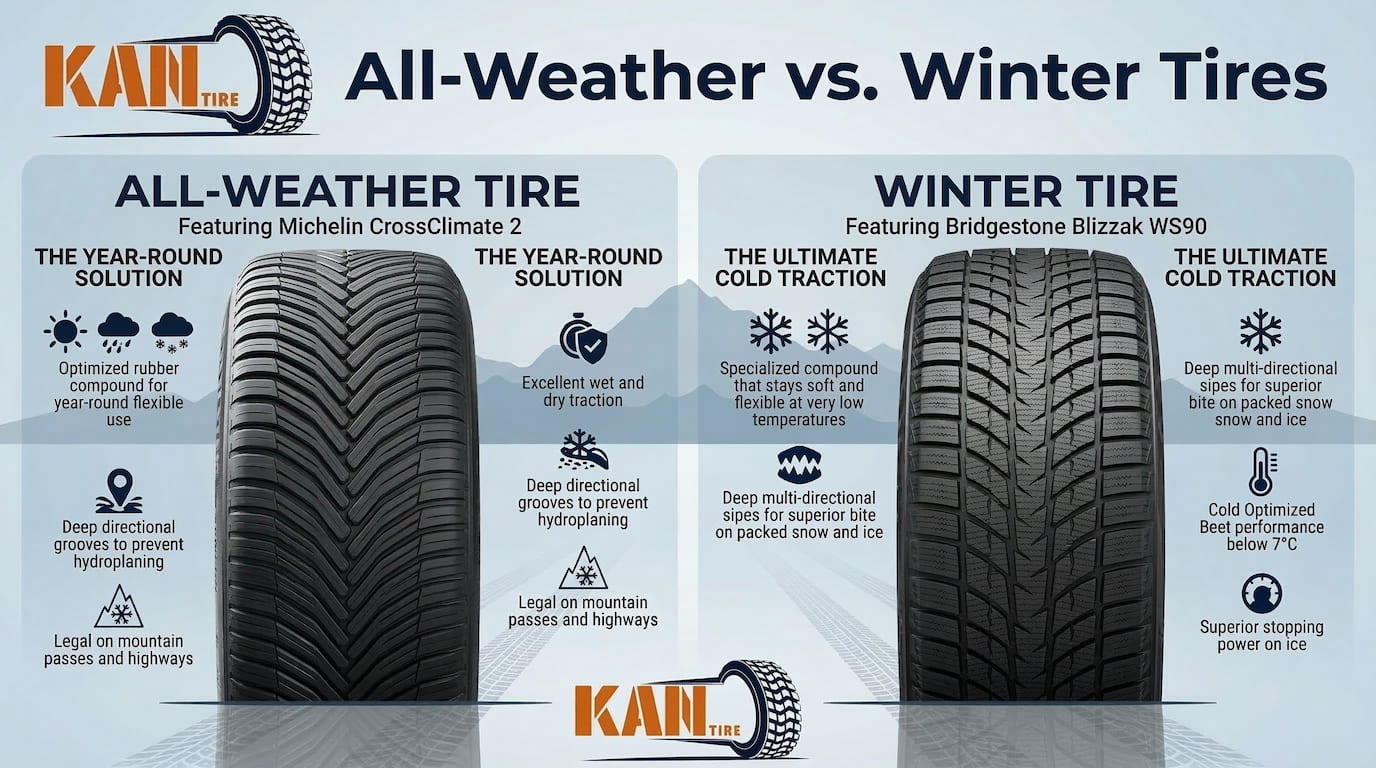
All weather tires are designed to be used year round, including during moderate winter conditions. They are built as a middle ground between traditional all-season tires and dedicated winter tires.
Most all weather tires carry the three peak mountain snowflake symbol. This means the tire has been tested and meets minimum winter traction requirements.
Compared to standard all season tires, all weather tires use a rubber compound that stays more flexible in cold temperatures. Their tread pattern is also designed to provide better grip on snow and slush.
The biggest advantage is convenience. Drivers can leave them on their vehicle all year without needing seasonal tire changes.
What Are Winter Tires?
Winter tires are specifically engineered for cold temperatures, snow, slush, and ice. They are sometimes called snow tires, but their performance advantage actually begins when temperatures drop below about 7 degrees Celsius.
Winter tires use a softer rubber compound that stays flexible in freezing weather. This flexibility helps the tire grip the road more effectively.
The tread design is also more aggressive. Deep grooves, specialized siping, and snow biting edges help winter tires maintain traction when roads are slippery.
Because of these features, winter tires generally provide the strongest braking performance and steering control during harsh winter conditions.
If your steering wheel shakes at highway speeds, a professional tire balancing service may help solve the problem.
Tire Markings Drivers Should Look For
Two symbols appear frequently on tire sidewalls.
The first is the M+S marking, which stands for mud and snow. This marking does not necessarily mean the tire is suitable for severe winter conditions.
The second is the three peak mountain snowflake symbol. This indicates the tire has passed standardized testing for winter traction performance.
Most winter tires carry this symbol. Many all weather tires do as well. This is one reason drivers sometimes confuse the two categories.
All Weather vs. Winter Tires in Real Driving Conditions
Understanding how these tires perform in real world situations helps clarify the difference.
Cold but Dry Roads
Even when roads appear clear, cold temperatures change how tires behave.
Winter tires remain soft and flexible in freezing conditions. This improves grip when braking or turning.
All weather tires are designed to perform reasonably well in cold temperatures, but they are still a compromise between winter performance and warm weather durability.
For drivers in areas where winter is mostly cold but dry, all weather tires can perform adequately.
Regular tire rotation service helps distribute tire wear more evenly across all four wheels.
Snow and Slush
Snow covered roads are where the design differences become more noticeable.
Winter tires use deeper tread blocks and more aggressive patterns to push snow away from the contact patch. This helps maintain traction when accelerating and braking.
All weather tires can handle light to moderate snow, but they typically do not match the traction of dedicated winter tires in deeper snow conditions.
Drivers who frequently encounter heavy snowfall will usually benefit from winter tires.
Ice and Extreme Cold
Ice is one of the most challenging road conditions for any tire.
Winter tires are designed to maintain flexibility in extreme cold, which allows the tread to grip tiny irregularities in icy surfaces.
All weather tires provide improved winter performance compared to standard all season tires, but they generally do not offer the same level of control and braking capability on icy roads.
This difference can become important during emergency stops or sudden steering adjustments.
Highway Driving vs City Driving
Driving style and road type also influence tire performance.
Highway commuters often face higher speeds, longer braking distances, and more exposure to unpredictable winter conditions. Winter tires typically offer greater confidence in these situations.
City drivers who travel shorter distances on well maintained roads may find that all weather tires provide a practical balance between winter capability and year round convenience.
Practical Ownership Considerations
Performance is important, but practical factors often influence tire decisions just as much.
Convenience
All weather tires allow drivers to keep a single set of tires on their vehicle all year.
This eliminates the need for seasonal tire changes. Drivers do not have to schedule installation appointments or store a second set of tires.
For people living in apartments or condos without storage space, this can be a major advantage.
Cost
At first glance, all weather tires may appear cheaper because only one set is required.
However, many drivers who use winter tires also keep a separate set of summer or all season tires. This means each set is used for only part of the year, which can extend their lifespan.
In some cases, the long term cost difference between the two strategies may be smaller than expected.
Tire Wear
Winter tires wear faster in warm temperatures. Driving on them during spring and summer can significantly reduce their lifespan.
All weather tires are designed to tolerate a wider temperature range, which allows them to remain on the vehicle year round.
Actual wear rates depend heavily on driving style, road conditions, and annual mileage.
Storage and Seasonal Swaps
Owning two sets of tires requires storage space and regular seasonal changes.
Many drivers pay tire shops to store their off season tires. Others handle storage at home if they have a garage or basement.
For drivers without storage options, all weather tires provide a simpler solution.
Who Should Choose All Weather Tires?
All weather tires can be a smart option for drivers whose winter conditions are relatively moderate.
They may be a good fit for:
- Drivers in regions with mild or inconsistent winters
- People who mostly drive within cities
- Drivers with lower annual mileage
- Vehicle owners who prefer the simplicity of one tire set year round
- Drivers who rarely travel on steep or rural winter roads
While they are not designed for the most extreme winter environments, they provide a practical balance between winter capability and convenience.
Who Should Choose Winter Tires?
Winter tires are usually the best choice for drivers who regularly encounter severe winter conditions.
They are especially beneficial for:
- Drivers living in areas with heavy snowfall
- Frequent highway commuters
- Drivers traveling through mountain or rural routes
- People who drive early mornings or late evenings when temperatures are lowest
- Families who want maximum winter traction and braking performance
For drivers facing harsh winter environments, winter tires provide a noticeable safety advantage.
Legal Considerations Drivers Should Know
In some regions, winter tire use is required during certain months or on specific highways.
For example, several Canadian provinces require approved winter tires during winter seasons. In British Columbia, designated highways require winter rated tires that meet minimum tread requirements.
Because laws vary by region, drivers should always check their local transportation regulations before choosing tires.
Insurance policies may also offer winter tire discounts, which can help offset some of the cost of owning a second set of tires.
Common Myths About Winter and All Weather Tires
Many misconceptions circulate about winter driving and tire performance.
One common myth is that all weather tires and all season tires are the same thing. In reality, all weather tires are designed for stronger winter capability.
Another misconception is that vehicles with all wheel drive do not need winter tires. While all wheel drive improves acceleration, it does not shorten braking distance on ice or snow.
Some drivers also assume winter tires are only useful in deep snow. In fact, their main advantage often comes from improved grip in cold temperatures.
Understanding these differences helps drivers make safer decisions.
Final Verdict: Which Tire Should You Choose?
The best tire choice depends on the winter conditions you actually face.
All weather tires offer year round convenience and reasonable winter performance. They work well for drivers in milder climates who want to avoid seasonal tire changes.
Winter tires remain the strongest option for severe winter conditions. Their specialized design provides better traction, braking, and control when temperatures drop and roads become icy or snow covered.
Rather than choosing based on marketing terms alone, drivers should consider climate, road conditions, driving habits, and local regulations.
The right tire is the one that matches the winter you actually drive in.
Quick Comparison Table
| Factor | All Weather Tires | Winter Tires |
|---|---|---|
| Year round usability | Excellent | Poor |
| Snow traction | Moderate | Strong |
| Ice performance | Moderate | Strong |
| Convenience | High | Low |
| Best for | Moderate winters | Harsh winters |
Frequently Asked Questions
Are all weather tires good enough for winter?
All weather tires can perform well in moderate winter conditions, especially in urban environments with regularly cleared roads. However, they generally do not match the traction of winter tires in deep snow or icy conditions.
Are winter tires worth it for city driving?
In regions with harsh winters, winter tires can significantly improve braking and control even on city streets. In milder climates, some drivers may find all weather tires sufficient.
Do winter tires stop faster than all weather tires?
In cold temperatures and snowy or icy conditions, winter tires typically provide shorter braking distances due to their softer rubber compound and specialized tread design.
Are all weather tires the same as all season tires?
No. All weather tires are designed for stronger winter performance and often carry the mountain snowflake symbol. All season tires usually prioritize warm weather performance.
Can I use winter tires year round?
It is not recommended. Winter tires wear faster in warm temperatures and may not perform as well on dry summer roads.
Do I still need winter tires if my car has all wheel drive?
All wheel drive improves acceleration but does not significantly improve braking or cornering on icy roads. Tire traction remains one of the most important safety factors.
 Tire Change
 Port Coquitlam